
How to Build a Simple Workout Corner at Home
Why Create a Workout Corner?
A dedicated workout corner can make exercise more convenient and consistent. You do not need a large room, expensive machines, or a complete home gym. A small, well-planned area can support stretching, strength exercises, mobility work, and light cardio.
The goal is to create a space that feels inviting and works for your routine. When your equipment is easy to see and access, there are fewer barriers between you and your workout.
Choose the Right Location
Start by looking around your home for an area with enough open floor space. A workout corner can fit in a bedroom, living room, home office, garage, or spare room. Even a space next to a sofa or desk may work.
Consider these points when choosing a location:
– Floor space: Leave enough room to move your arms and legs without hitting furniture.
– Ceiling height: Make sure you can stand comfortably and reach overhead.
– Ventilation: Choose an area with fresh air or a nearby window if possible.
– Lighting: Natural light can make the space feel brighter and more pleasant.
– Privacy: A quieter area may help you stay focused.
– Storage: Look for a nearby shelf, cabinet, or wall where equipment can be kept neatly.
Before arranging the space, measure the available area. Mark the edges with removable tape if you are unsure how much room you need. Try a few basic movements, such as reaching overhead, bending, and stepping from side to side.
Start With the Essentials
A simple workout corner does not require a long list of equipment. Begin with a few versatile items that support different types of exercise.
A Workout Mat
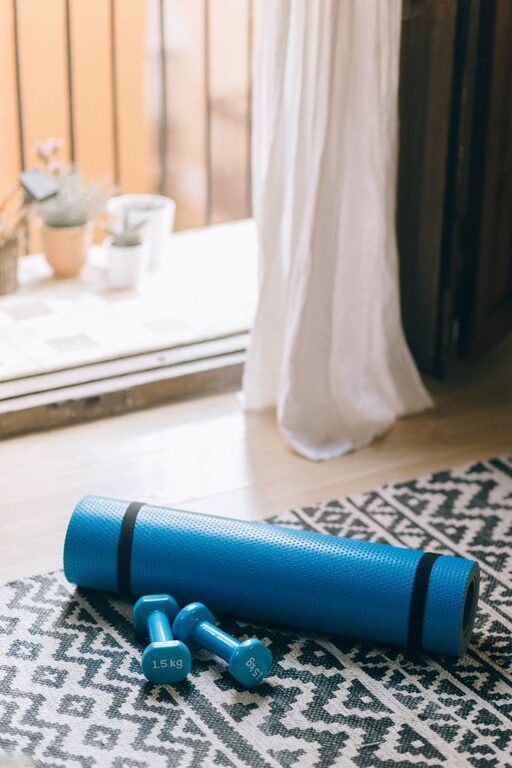
A mat creates a clean, comfortable surface for stretching, floor exercises, and bodyweight movements. Choose one that is long enough for you to lie down fully and wide enough to allow natural movement.
Look for a mat that is:
– Easy to clean
– Thick enough for comfortable floor work
– Non-slip on the bottom
– Simple to roll and store
If you have hard floors, extra cushioning may be useful. If you have carpet, a thinner mat may be enough.
Resistance Bands
Resistance bands are lightweight, affordable, and easy to store. They can be used for a range of exercises, including rows, presses, leg movements, and warmups.
A small set with different resistance levels gives you more flexibility. Store the bands in a basket or fabric pouch so they do not become tangled.
Light Dumbbells
A pair of light dumbbells can add variety to simple exercises. Choose a manageable weight that allows you to use controlled movements. Adjustable dumbbells can save space if you want several weight options without storing multiple pairs.
Keep weights on a stable surface or low rack. Avoid stacking heavy equipment where it could fall.
A Small Stability or Step Tool
Depending on your routine, you might add a small step platform, balance pad, or stability ball. Choose only one item at first. The best equipment is the kind you will use regularly and store safely.
Arrange the Space for Easy Movement
Good layout matters more than decoration. Keep the center of the workout area open and place equipment around the edges.
A practical arrangement might include:
– Mat in the center
– Dumbbells near one side
– Resistance bands in a small container
– Towel and water bottle on a nearby shelf
– Phone or speaker placed where it cannot be stepped on
– Storage basket against a wall
Keep pathways clear. Do not place equipment where someone could trip over it, and avoid leaving bands, cords, or loose accessories on the floor.
If your space is very small, use items that can be folded, rolled, or stored under furniture. A wall hook, narrow shelf, or lidded storage box can help keep the area organized without taking up much room.
Add Simple Safety Features
A safe workout corner should be stable, uncluttered, and easy to use. Check that the floor is even and that your mat does not slide during movement.
If you place equipment on a shelf, make sure the shelf is securely attached and can handle the weight. Keep heavy items low rather than overhead. If you use a mirror, mount it carefully or choose a freestanding version with a stable base.
Allow enough space around the mat for exercises that involve stepping, reaching, or lying down. Keep pets and small children away from equipment while it is in use, especially when weights or elastic bands are involved.
Use equipment according to the manufacturer’s instructions. Inspect bands, handles, and straps from time to time, and replace items that show signs of damage.
Make the Corner Inviting
A workout space does not need to look like a commercial gym. A few small design choices can make it more comfortable and motivating.
Consider adding:
– A bright lamp or better overhead lighting
– A washable towel
– A simple wall calendar
– A small plant placed safely out of the way
– A basket for accessories
– A speaker or headphones for music
– A printed list of favorite exercises
Choose colors and materials that fit the rest of your home. A clean, calm space may make it easier to focus, while brighter colors can give the area more energy.
Avoid filling the corner with items that do not serve a purpose. Too much decoration can reduce usable space and make cleaning more difficult.
Create a Simple Workout Routine
Your corner will be most useful when you have a clear plan for using it. Keep the routine simple at first. For example, you might divide your week into different types of movement:
– Day one: Bodyweight strength exercises
– Day two: Stretching and mobility
– Day three: Light cardio or active movement
– Day four: Resistance band exercises
– Day five: A short full-body routine
You can also set a small daily goal, such as spending 10 to 20 minutes in the space. A consistent short session may be easier to maintain than an ambitious plan that feels difficult to fit into your schedule.
Write your routine on a card or save it on your phone. Preparing your plan in advance reduces the time spent deciding what to do.
Keep It Clean and Organized
A tidy workout corner is easier to use. Wipe down equipment after use when needed, wash your mat according to its care instructions, and return every item to its storage place.
Set aside a few minutes each week to:
- Remove clutter.
- Check equipment for wear.
- Clean the floor and mat.
- Refill or wash your water bottle.
- Update your workout plan if your needs have changed.
As you build the habit, add equipment slowly. If an item sits unused for several weeks, consider moving it elsewhere or choosing a simpler alternative.
Build a Space You Will Actually Use
The best home workout corner is practical, comfortable, and easy to access. Start with an open area, a mat, and a few versatile pieces of equipment. Keep the layout simple, store everything safely, and create a routine that fits your schedule.
You can always expand the space later. For now, focus on making exercise convenient. A small corner that you use regularly is more valuable than a large home gym filled with equipment you rarely touch.